how I’m dealing with China’s smoking culture

This afternoon, at the nearby park, I saw a Chinese man pushing his baby’s stroller. He was spending some quality time with his young son and the sight of that warmed my heart, but only for a moment. As soon as I saw the cigarette I froze. When the man took a puff and the cloud of smoke floated over the baby’s head all the love that I previously felt turned into ice-cold anger.

Furious thoughts about the man started invading my head. He doesn’t he care about his child. He is such a terrible person that he doesn’t mind to smoke around his little kid. What a horrible man, he is affecting the poor baby’s whole future — specially his health! Stupid man!!! Then my thoughts started going back to all of the other times I saw Chinese people smoke without regard for anyone around them.

It happens all of the time. In restaurants, inside malls, stores, cars, elevators, stairwells, and it doesn’t matter if people are around, or if those people are children or pregnant women, the Chinese men will still smoke!

Fortunately today my inner rant didn’t last for as long as it usually does. As soon as I realized the angry dialogue going on in my head I made the decision to stop it from going any further.

Who was it helping anyway? The Chinese man was oblivious to my inner frustrations and disgust. And I was only hurting myself by continuing to feed the angry thoughts. So I started to rationalize. After all those men that smoke everywhere must not know any better…

I hope that one day they will learn to be mindful of where they smoke and of the people around them. For now, feeling angry towards those people only hurts me.

So, for the thousandth time I realized again that it’s so true what they say: if you hold anger inside you only hurt yourself. 

I really hope that I can remember this the next time, and every time, those feelings start to come up. For now, I am so glad that my entire day wasn’t ruined by my own doing.

The thing about China…

At this point I’ve lived in China for a little over seven months. Thankfully I was able to have a break from all of the craziness of China during the recent Spring Festival holiday break.

Okay, okay China is actually not all “crazy”. There are many, many, great things about China. In fact, my first experience with China was nothing short of magical!

However coming back it was harder to feel much of the same magic that I felt the first time around. This time it was so tough to leave my loved ones again. This time loved ones included things like fresh air and so many other Western comforts, like clean and quiet streets.

The thing about China is that it really is a beautiful place. It is full of unique landscapes and history. Sadly though, most Chinese cities and rural areas are extremely polluted.

Many of you may already be aware of the air pollution problem that China faces. Unfortunately it doesn’t stop there. The rivers and lakes are super trashed too.

There is an incredible amount of people that just litter anywhere. Chinese cities (at least all of the ones that I have been to) actually have trash cans everywhere but Chinese people don’t seem to realize their purpose. Even if there is a trash bin just feet away people will opt to just drop their trash right on the floor — or in the rivers or lakes.

This type of behavior makes it seem like Chinese people don’t care for their land, for preserving any natural environment.

The lack of care goes beyond how Chinese people treat their land. Not only is there an incredible amount of land and water pollution, noise pollution is a huge problem as well.

Fireworks go off day and night. Any day or night, without any warning. It simply doesn’t matter if it’s one am and most people are trying to go to sleep, or if it’s seven am and people are trying to stay asleep!

Fireworks blasting off throughout the day aren’t the only noises that permeate China. Car, moped, and bus horns are the music of the streets — except they are not pleasant to hear. Chinese vehicle horns are so jarring that you’ll soon end up with a headache, or just feeling completely annoyed and upset with the unpleasantness of the sound.

As if man-made things aren’t enough to clog up your ears, Chinese people are so loud! This is especially true when they talk on their phone. It’s really not the funnest thing to listen to others conversations — even if you don’t understand a word of what they are saying.

Alright. Okay. So it’s right about the time to do a disclosure now.

Of course not every person in China is this way, but these behaviors do seem to affect a great majority of the Chinese people. It is such a great amount of people that fall into this generalization that (as a foreign visitor) you absolutely cannot walk outside of your home or hotel, for even just fifteen minutes, without experiencing any of these things.

All in all the littering and noise pollution can be something tolerable. Fireworks don’t really last for too long (usually no more than an hour). The honking I’m sure that as annoying as it is has saved many lives. Finally the loud talking can easily be escaped by simply popping in some headphones. As for the littering there are actually people who’s sole job is to pick up the trash on the streets and sidewalks. So eventually most of the trash gets picked up.

Yes, most of those things can easily be tolerated with some awareness and lots of patience.What is not so easily tolerated are the following two things:

One, the loud hacking of throat gunk followed by spitting wherever it’s most convenient — so anywhere. Really, there are puddles of spit everywhere. Out on the streets on walkways, inside buildings, even busses!

The second thing that holds no boundaries — and is just as intolerable as the first — is the peeing and pooping in public. Throughout my time here I’ve only seen a handful of men openly pee on the walkways, and (so unfortunately) one pooping. Fortunately I haven’t seen more, but I’ve seen plenty of turds. Super gross, I know!

The thing is that these Chinese people that do this type of thing probably don’t know any better. From what I have witness they learn this behavior from early childhood.

I’ve seen tens, probably hundreds, of little children openly peeing and pooping on the sidewalks — even children old enough to hold it —  with their parents right besides them holding them up to pee or poop if they aren’t old enough to do it themselves.

So, if you ever visit China and notice that people squat everywhere instead of sit on any floors, sidewalk, or steps it is because every inch of every walking surface is plastered with throat gunk, urine, or human waste.

But please only take this post as informational material and don’t let it deter you from ever visiting any Chinese city. As I mentioned earlier, the thing about China is that it really does have many great things to offer the foreign visitor. It actually is kind of a magical place. Just be aware of these things so that you are prepared to handle them when you do visit — and perhaps maybe don’t stay here for as long as I have.
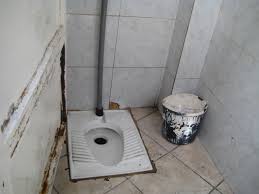
the Chinese toilet —a squatty potty!!!

Yeah. I’m taking about it. I didn’t know about it before I arrived in China and it’s something that I should’ve been told… I would’ve been more prepared — both mentally and physically!

Here goes, Chinese toilets are not like Western toilets. That’s it. Big shocker huh? I was shocked, my egocentric mentality thought that all toilets were like the ones that we have in the West. Nope. These toilet are appropriately named ‘squatters’, they’re flat on the ground and, as a lady, you have to squat to go potty. For guys the standard urinals are available, unless they’re caught needing to go no.2 —then the squat is on!

squatty-potty.jpeg

It takes some getting used to. I’m not going to go into details, there are actually plenty of other sites that will explain how to use these types of toilets. What I want to point out are the physical benefits that you get from using a squatty potty.

The squat gives your legs a great, probably much needed, stretch and it activates your core too!

There you go. That’s it, again. It’s so simple, you get a core and leg work out each time you use a squatty potty. Further, in a squatting position the muscles in your core actually work better together to help you along your business faster. Plus, it’s great for your feet too!

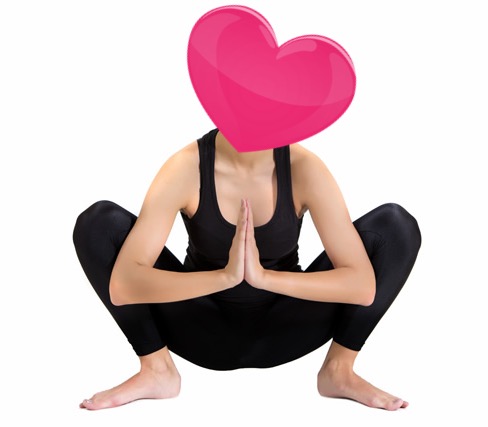
When you squat you have to root your toes into the ground, to actually stay balanced. This is a practice that taught in so many Yoga poses, among many things it really helps with blood flow.

Imagine, each time you use a Chinese toilet you actually enhance your body!

In-fact using a Chinese toilet is basically just like doing Frog Pose —you get the same benefits.

frog-pose-google.JPG

Sure, this style of toilet is different, even awkward or silly, but isn’t at all bad —it’s actually good for you!

It certainly takes some getting used to but if it’s beneficial for your body…then it’s worth it.

Prana: life energy

Prana is that which encompasses everything. It is found in all forms of life from bacteria, to plants, to animals. Prana is indescribable, but can be characterized as something like ‘the Force’, the same Force that permeates the world of Star Wars. In our world It is the Universal Energy, the Vitalizing Force, the Vital Air, the Life Breath that surrounds us. It is in us and is us. We store Prana in our body, the Prana that we breath-in through the air and we become charged with It; Prana becomes us.

It is the energy that we use to go about our day. Swami Vishnu-devananda in The Complete Illustrated Book of Yoga states that “every action conscious or unconscious uses up a certain amount of Pranic Energy — [then] when the amount of Pranic Energy spent is more than the body can restore, the body feels weak”. A quick way to get tired fast is by using Pranic Energy to fuel uncontrolled emotions. Unnecessary anger, excessive worrying, greed, anxiety, tension and all such lower emotions just carelessly waste Pranic Energy.

That is why it is so important to meditate. By practicing meditation one can relieve the mind and body of unnecessary tensions and replenish Pranic Energy. This energy which brings us an abundance of vitality and strength.

It may be the year of the Goat but for me it’s the year of meeting BIG goals

my awesome boss ladyI’ve been living in China for over five months now and I’m ashamed to say that I haven’t really learned much Chinese — umm, excuse me, the correct term is Mandarin. Chinese people call their language Chinese so I’m calling it that too.

My excuse isn’t that I hang-out with a bunch of other expats. No, I’m surrounded by Chinese people all the time. Chinese people with very limited English speaking skills. How do I get by? Well, I’ve learned some words in Chinese, combined with the few words that they know in English, plus pointing, and lots of Google translate. But, it’s getting to the point where that’s really not enough, and I refuse to continue to be one of those foreigners that doesn’t learn the language of the country that they’re living in!

The truth is I’m a bit scared to learn Chinese, actually I mainly fear that I won’t be able to learn it. It just sounds so foreign!  But, I’ve been around it long enough and I cannot continue to keep relying on my Chinese liaison (oh, yeah, there’s a person that helps me communicate with the school, so she helps me get by too).

I’m making myself continue to study Chinese and this time to be diligent about it. I’m giving myself a thirty minute window, every day, to start with. I have the tools to do so, I’m signed up for a Coursera Chinese course, then I downloaded a bunch of Spotify playlists, plus I have a Chinese textbook, and, yeah, I’m surrounded by Chinese people. So, we’ll see how far I get in the next five months. I hope that I will be able to carry-on a simple conversation, or at the very least that I’ve quadrupled my vocabulary!

Quick list of the words that I know so far:

Hello: Nín hǎo

Good-morning: zǎoshang hǎo

I like: wǒ xǐhuān

Do you like: nǐ xǐhuān ma?

Thank you: xièxiè

Meal time: Chīfàn

Tomato: xīhóngshì

Seaweed: hǎidài

Cucumber: huángguā

Celery: qíncài

Apple: píngguǒ

Orange: Google translate doesn’t have the right transition for this!

Grapes: Google translate doesn’t have the right transition for this!

Walk: Sànbù

Carrot: Húluóbo

Vegetables: Shūcài

egg-noode soup: Jīdàn miàn tāng

Rice: mǐfàn

Chicken: 

Meat: Ròu

Pork: Zhūròu

Flower: Huā

I love you: Wǒ ài nǐ

Goodnight: Wǎn’ān

Stupid: Google translate doesn’t have the right transition for this!

Oh my god:  Google translate doesn’t have the right transition for this!

Good: Hǎo

I don’t understand: kin Bù dǒng

yes:  Google translate doesn’t have the right transition for this!

no: Méiyǒu

Water: Shuǐ

What is that: Zhè shì shénme

What is this: Zhè shì shénme

1—10:  Yī, èr, sān, sì, wǔ, liù, qī, bā, jiǔ, shí

Yeah, I know, it’s not much so I gotta a long way to go…

Surya Namaskars, aka Sun Salutations

The popularity of Sun Salutations has taken a firm grasp on Western culture. If you haven’t started practicing daily Sun Salutations by now, you better get yourself a Yoga mat ASAP! The sequence of poses that are included in Surya Namaskars offer many great benefits to the people that practice. This series of postures is proven to bring vitality to the practitioner! In-fact, Sun Sals are referred to as a “concentrated Yoga potion” in the book The Complete Yoga Book by James Hewitt, meaning that many great benefits of Yoga can be attained just by practicing this series of postures. So, if you wanna try them out for yourself, here, I offer a quick guide:

Side note: begin by doing two cycles everyday, traditionally it is advocated to do twelve cycles each day — but you can work yourself up to that in due time (I myself am starting with two cycles each day, this new year, and adding two more each month, so by June I’ll be up to the desired twelve!).

Starting posture: Mountain Pose. Stand up straight, palms together to the right of your heart with feet firmly rooted on the ground. Make all four corners of the feet, and all of the toes, charge at the ground with energy. Let that energy flow all the way up, past the crown of the head

Position two: slight back bend. Bring hands up over the head and reach them up and back, with a slight backward bend.

Position three: forward bend. Bring hands forward to reach down, or touch the floor. If possible* keep the legs straight, lift up the thighs up, and bring the face to the knees. *If your body doesn’t want to take it that far then listen to it and bend your knees as your body requests.

Position four: hands on the floor and one leg back. Moving out of the forward-bend bring one leg back, grip the floor with the fingers and toes, and lift the head up.

Position five: Wheelbarrow Pose, aka Plank. Bring the other leg back to meet the first. Support the entire body on just the hands and toes. The body should be in a straight line from the crown of the head to the heels, while the arms are pushing the ground away.

Position six: Eight Parts Posture/Sastangganamasker. Tightening the abs while lowering the chest to the floor. Then let the knees and forehead touch the ground, but keep the butt raised and elbows high.

Position seven: Cobra Pose/Bhujangasana. Bringing the pelvis to the ground, let the tops of the feet carry the weight as the arms straighten. The shoulder should be down and the fingers and the palms should be pushing the ground away.

Position eight: downward dog. While pushing the ground away in Cobra Pose, use the core muscles to lift the hips high — stomach should be pulling back in towards the spine. The head comes loose between the arms and the legs are straight. If the heels can touch the ground then great — if not, that’s okay too.

Position nine: keep the hands on the floor and one leg forward. Lifting the head and chest forward bring one foot between the hands.

Position ten: forward bend. Bring the other foot to meet the first between the hands and lift the hips into a forward bend.

Position eleven: stand up straight and slight back bend.  Bring the hands up, stand up straight, then continue to reach the hands up and back, into a slight backward bend.

Final position: Mountain Pose. Lower the arms and stand up straight, palms together to the right of the heart and feet firmly rooted on the ground.

This completes a cycle of Surya Namaskars.

This series of postures is simple to do yet super beneficial. It is designed to tone the entire body, and bring youthful suppleness to the spine. It is recommended for anyone and everyone that wants to maintain a healthy and fit body well into old age!